


The Pros and Cons of Natural and Engineered Materials in Interior Design

Choosing materials is one of the biggest parts of designing a home or office. Colours matter. Layout matters. However, materials shape how the space looks, feels, and lasts over time.
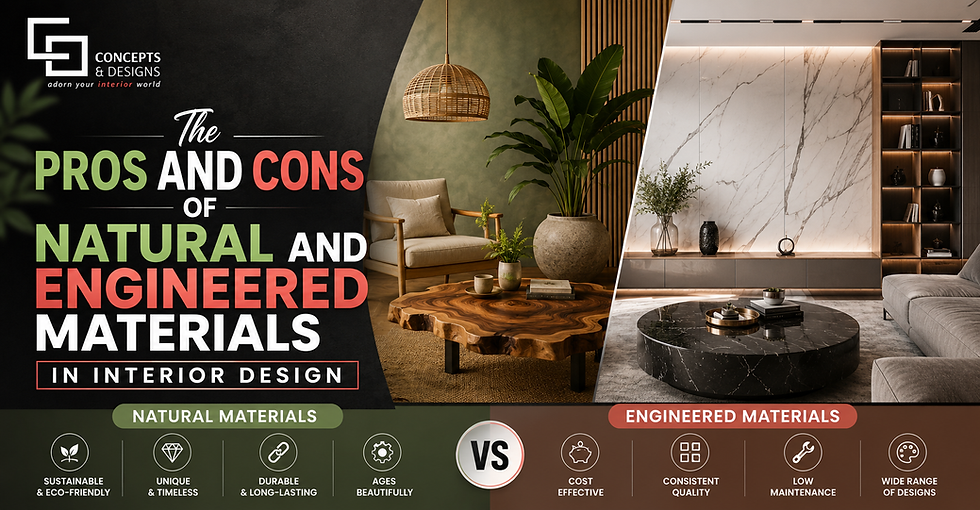
That is why every experienced interior designer in Bhubaneswar pays close attention to material selection during the planning stage.
Natural and engineered materials both offer advantages. At the same time, both come with limitations. The right choice depends on your lifestyle, budget, maintenance expectations, and design goals.
So, before finalising interiors, it helps to understand how these materials compare in daily use.
What Are Natural Materials?
Natural materials come directly from nature with minimal processing.
Some common examples include:
● Solid wood
● Natural stone
● Marble
● Granite
● Bamboo
● Leather
These materials often bring warmth and texture into a space. In addition, they create a timeless appearance that many homeowners prefer.
Advantages of Natural Materials
ADVANTAGE | WHY IT MATTERS |
Unique appearance | Every piece has natural variation |
Long-lasting appeal | Designs stay stylish for years |
Premium feel | Adds richness to interiors |
Natural texture | Creates warmth and depth |
For example, natural wood flooring can make living spaces feel more welcoming and comfortable.
Similarly, marble countertops continue to remain popular in luxury homes because of their elegant appearance.
The Drawbacks of Natural Materials
Natural materials look beautiful. Still, they may need more maintenance over time.
For instance, wood can react to moisture. Marble can stain if not sealed properly. Natural stone may also develop wear with heavy use.
CHALLENGE | IMPACT |
Higher cost | Premium materials increase budgets |
Maintenance needs | Some surfaces need regular care |
Moisture sensitivity | Wood may expand or contract |
Surface wear | Natural textures can age faster |
Because of this, many homeowners now combine natural and engineered finishes instead of depending fully on one option.
A Bhubaneswar interior designer often balances appearance with practicality during material planning.
What Are Engineered Materials?
Engineered materials are manufactured products designed for durability, consistency, and easier maintenance.
Popular examples include:
● Laminates
● Engineered wood
● Quartz surfaces
● MDF panels
● Acrylic finishes
● Vitrified tiles
These materials are now widely used in modern homes, offices, and modular kitchens.
Moreover, engineered products come in a huge variety of colours, textures, and finishes.
That gives homeowners far more design flexibility.
Why Engineered Materials Are Popular
Many modern homes now prefer engineered materials because they are practical for daily use.
Key Benefits
BENEFIT | WHY HOMEOWNERS PREFER IT |
Easier maintenance | Surfaces clean quickly |
Budget-friendly options | Lower cost compared to some natural materials |
Consistent finish | Uniform appearance across surfaces |
Better moisture resistance | Suitable for kitchens and storage areas |
For example, quartz countertops can handle heavy kitchen use with less maintenance compared to natural marble.
Likewise, laminates are now commonly used in a modular kitchen in Bhubaneswar because they are durable and available in many styles.
The Limitations of Engineered Materials
Engineered materials offer convenience. However, some people feel they lack the depth and authenticity of natural finishes.
In certain premium spaces, heavily synthetic surfaces may also feel less luxurious visually.
Common Concerns
CONCERN | EFFECT |
Less natural variation | Surfaces can look more uniform |
Lower resale perception | Some buyers prefer natural finishes |
Artificial appearance | Certain low-quality finishes may look less premium |
That said, modern manufacturing has improved significantly. Many engineered finishes now closely resemble real wood, stone, and marble.
As a result, homeowners can achieve premium-looking interiors without extremely high costs.
Which Option Works Best for Different Spaces?
Different rooms need different materials.
For example, natural wood may work beautifully in bedrooms and living rooms. Meanwhile, engineered surfaces often perform better in kitchens and workspaces because they handle moisture and daily wear more effectively.
This is why many homeowners now consult the best interior designers in Bhubaneswar before finalising materials for large projects.
An experienced office interior designer in Bhubaneswar can also help businesses choose materials that balance appearance with durability.
Why Material Planning Should Start Early
Material decisions affect more than appearance alone.
They also influence:
● Budget
● Maintenance costs
● Construction timelines
● Furniture choices
● Lighting design
Because of this, planning materials early helps avoid expensive design changes later.
A reliable construction company in Bhubaneswar and a skilled interior design company in Bhubaneswar often work together during the early stages of planning to create smoother project execution.
Choose Materials That Match Your Lifestyle
There is no single perfect material for every home. Natural materials offer character, texture, and timeless beauty. Engineered materials offer convenience, durability, and flexibility. If you are planning your dream space, working with an experienced interior designer in Bhubaneswar can help you select materials that fit your lifestyle, budget, and long-term needs.
You can also connect with Concepts & Designs for guidance on layouts, finishes, storage solutions, and modern interior ideas built for everyday living.


Comments